

Australia Needs a More Mature Right to Work From Home
AHRI has raised a valid question: if hybrid work is already common, does Australia really need a legal right to work from home? This article explores why informal access is not the same as an enforceable right, and why the better path may be a structured, rebuttable framework for suitable roles with clear grounds for refusal and accessible review mechanisms.

When “It’s Not Personal” Still Hurts
Redundancy may be a business decision, but the experience is deeply personal. This post explores how leaders and HR can deliver redundancy conversations with empathy and clarity, support people through the aftershock, and maintain psychological safety for the individuals impacted — and the teams who remain.
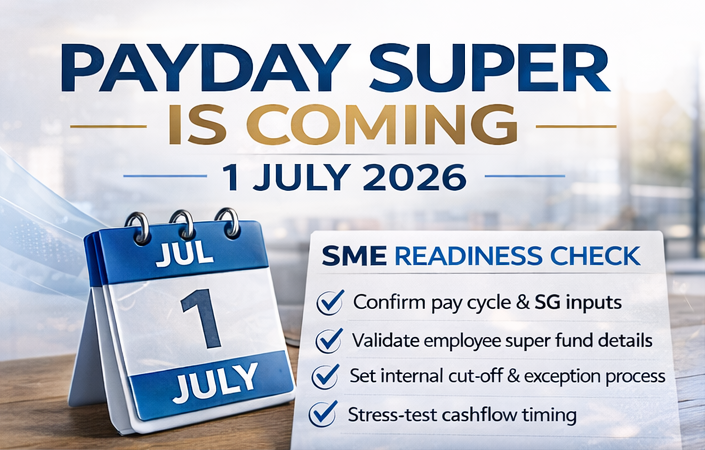
Payday Super is coming: what employers need to do before 1 July 2026
Payday Super starts 1 July 2026, meaning super must be paid in line with each pay cycle so it reaches employees’ nominated funds within 7 business days. For SMEs, the risk isn’t intention — it’s process: onboarding data, pay item/OTE setup, clearing house lead times, and approvals. This article outlines what’s changing, the most common traps, and a practical readiness checklist to help you get compliant before July.

Sacking someone for using work email to job hunt: why the Fair Work Commission said it went too far
A recent Fair Work Commission decision is a timely reminder that a policy breach doesn’t automatically justify summary dismissal. Even where an employee has done the wrong thing, employers still need a fair process and a proportionate response. Here’s what the decision means in practice — and the steps SMEs should follow to keep conduct decisions defensible.

When you change a part-time roster, you might be “terminating” without realising it
If you employ part-time staff, roster changes need more than a quick text and a new timetable. Many modern awards require a written agreed pattern of work (days and hours), and changes often need written agreement too. This blog post breaks down the key lessons from a recent Fair Work Commission decision and a simple checklist to keep your changes defensible.

From “Are you OK?” to defensible action: how managers should respond when someone isn’t coping at work
Mental health concerns at work rarely start as a crisis — they drift there when leaders don’t have a consistent way to respond. In this article, we outline a practical, risk-based approach for SMBs: describe the facts, check in with care and clarity, match action to risk level, agree time-bound supports and expectations, and document the essentials. The goal is supportive, proportionate action that protects the person and the business — without managers stepping into a clinician role.

The new deal: how employee expectations are reshaping people & culture in SMEs
Employee expectations have shifted – and they’re not shifting back. Across all generations, people are weighing up jobs differently: flexibility, fair treatment, psychological safety and genuine development now sit alongside pay, not behind it. For small and medium businesses, that means getting clear on what you really offer, making sure leaders actually live it, and building simple, human systems around flexibility, feedback, workload and growth.

Award Changes and Gender Undervaluation: Building an IR Change Roadmap with Winnchester
When you strip away the headlines, some of the biggest impacts for employers right now are coming from award changes already in motion – especially gender undervaluation decisions in female-dominated sectors. These shifts go well beyond “updating pay rates”, affecting classifications, loadings, penalties and budgets over multiple years. In this article, Winnchester Consulting shows how to turn a tangle of award changes, gender equity adjustments and new IR obligations into a clear, staged roadmap that keeps you compliant, cost-aware and able to explain the changes with confidence.

Fixed-Term Contracts After Closing Loopholes: A Practical Guide from Winnchester Consulting
Sometimes fixed-term contracts feel like an easy way to “keep options open” – until the law changes underneath you. The Closing Loopholes reforms now tightly restrict how long fixed-term contracts can run, how often they can be renewed, and when exceptions apply, with several common carve-outs expiring in November. In this practical guide, Winnchester Consulting walks you through how to audit your fixed-term workforce, test whether exceptions still genuinely apply, and plan conversions or exits early so you stay compliant without losing critical flexibility.

Life After Non-Competes – How Winnchester Is Helping Clients Get Ready
Over the next few years, we expect to see a meaningful shift in how Australian employers can use post-employment restraints. One of the key reforms on the horizon is a ban on non-compete clauses for employees under the high-income threshold.
At Winnchester Consulting, we’re treating this as more than a legal tweak. It goes to the heart of how our clients protect their businesses, manage talent risk and design contracts that will stand up in practice.

Flexible work and a recent FWC decision: what you should actually do next
A recent FWC decision involving Westpac didn’t create a “right to WFH” — it reaffirmed the case-by-case test under section 65. What swayed the Commission was the nexus to caring responsibilities, a strong remote track record, the role’s suitability for online delivery, and an unexplained policy reversal. For employers, the lesson is simple: assess eligibility, gather role-specific evidence, consider alternatives, document your reasoning, and stay consistent with past practice.

The Right to Disconnect: Your Culture Test Arrived in 2025
The Right to Disconnect: Your Culture Test Arrived in 2025
After-hours “urgency” is about to meet the right to disconnect. This reform exposes poor planning and rewards teams that respect recovery time. The win isn’t just compliance—it’s sharper focus, fewer interruptions, and better work. If your inbox culture needs a reset, I’ll help you implement policy, rhythms, and scripts that actually stick.

2025 Payroll & Contracts Reset: SG to 12%, Fixed-Term Limits, and Your Positive Duty
2025 demands precision: super to 12%, tighter fixed-term rules, and a positive duty to prevent workplace harassment. Policies and posters aren’t enough—leaders need clear controls, training, and monitoring. I turn the legal shifts into a simple operating model: updated contracts, compliant payroll settings, and manager playbooks that work on Monday.

Casual Employment Has Changed: The End of “Permanent Casuals” (Finally)
Casual Employment Has Changed: The End of “Permanent Casuals”
Labels won’t save you—how the relationship works in practice now drives casual status. Regular rosters, predictable hours, and “casuals” booking annual leave are conversion red flags. I map your cohort, recommend who converts and who stays casual, and deliver the letters and contracts so you can move decisively and lawfully.

Wage Theft is Now a Crime: How Prepared is your Payroll?
Wage Theft Is Now a Crime: How Prepared Is Your Payroll?
From 1 January 2025, intentional underpayment is a criminal offence. Annualised salaries, missed penalties, and classification errors are the usual culprits—and they’re fixable. My HR Audit spots risk quickly, quantifies exposure, and closes gaps before regulators or headlines do. Get ahead of it with a practical, no-drama remediation plan.